
EMS suit comparison 2026
The EMS suit comparison that shows its work.
6 home suits and 4 professional systems on the US market, compared on published specifications with one public scoring method. We tell you who we are, link every fact to its source, and let you check the result.
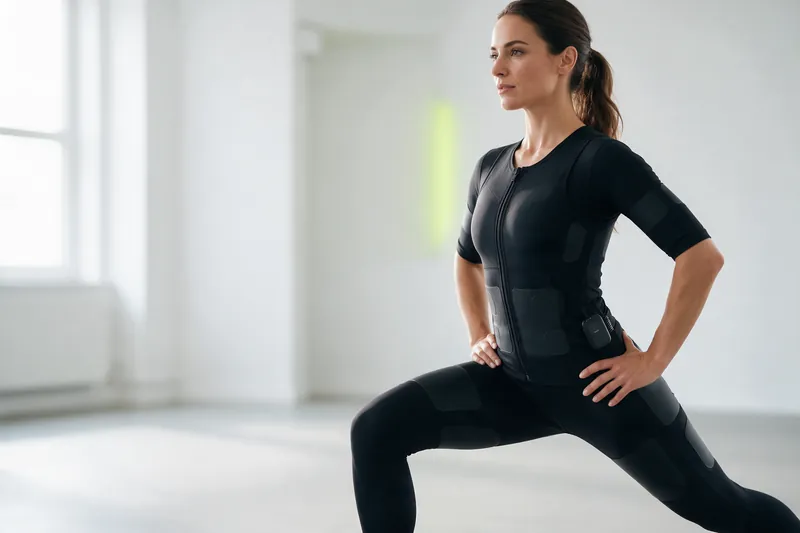
The ranking
Best home EMS suits of 2026, top three
Scores come from five weighted criteria. The full list, with every system and the complete spec table, is on the ranking page.
-
Visionbody
Best overallThe most complete package we found: cable-free, 24 dry electrodes on 12 channels including calves and inner thighs, a verifiable FDA 510(k) record and no subscription. The suit warranty is its weak spot.
- Cable-free
- 24 dry electrodes
- 12 channels
- FDA 510(k) K222386
- No subscription
- Owner community and gym network
- $1,890
8.8/ 10USA / Europe -
TitanBody
Strong hardware, open questionsCapable dry-electrode hardware at a fair price with no subscription. It claims FDA clearance but publishes no 510(k) number, and we found no FDA record under its name.
- Cable-free
- 20 dry electrodes
- 10 channels
- No FDA number published
- No subscription
- $1,895
7.5/ 10USA -
PEPPER
Best newcomerA verified FDA clearance, dry electrodes and the lowest entry price in the group. Channel count and stimulation parameters are not published, and the app costs $200 a year after the first year.
- Wireless
- 20 dry electrodes
- FDA 510(k) K233770
- App $200 / year after year 1
- From $1,395
6.8/ 10USA / Europe
Why this site exists
Most EMS “review” sites hide who pays for them. We don’t.
We work with Visionbody, and we say so on every page. Because you know where we stand, we have to earn your trust the hard way: with facts you can verify.
- Every spec linked to a source
- “Not published” instead of guesses
- Same rubric for every brand
- No invented customer reviews
Read our disclosure · See our fact check of a competitor-run review
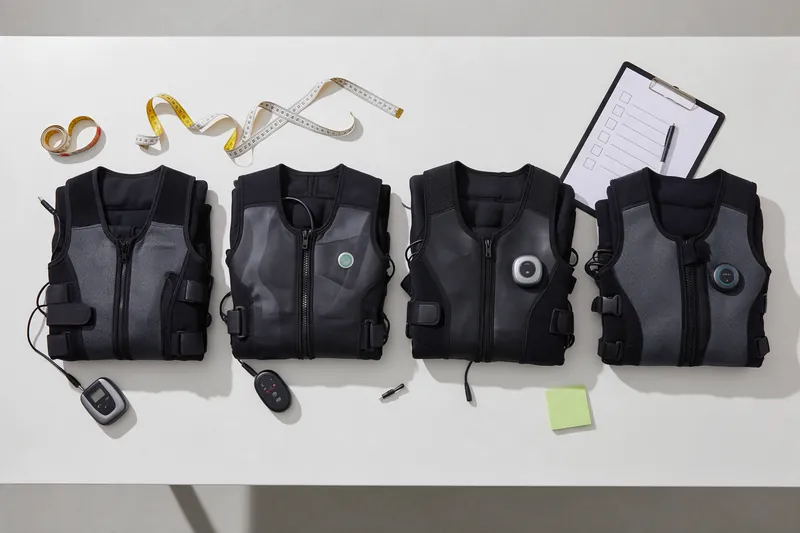
What separates EMS suits
Five things that decide how good a system is
Stimulation technology
How the impulse reaches the muscle: cable-free operation, electrode type, number of independently controlled channels, and the published frequency and pulse-width range.
Control and software
How you steer a session: app or console quality, per-channel intensity, programme library, support for trainers running several people, and update policy.
Comfort, hygiene and care
What daily use is like: preparation time, whether the suit must be sprayed wet, washing, sizing and how many people can share a system hygienically.
Safety and certification
Documented conformity: medical-device certification, quality-management certification, published safety information and intensity safeguards.
Cost and ownership
What it costs to own: whether the price is public, compulsory subscriptions, warranty length, spare suits, and where it is sold and serviced.
Weigh it your way
Care more about price than channels? The methodology page gives you the raw scores, so you can apply your own weights.
Spec comparison
The top home suits side by side
| Specification | Visionbody | TitanBody | PEPPER | Katalyst |
|---|---|---|---|---|
| Our score | 8.8 / 10 | 7.5 / 10 | 6.8 / 10 | 6.7 / 10 |
| Built for | Home, personal trainers, studios (Pro line)[3] | Home, also marketed to studios[1] | Home[1] | Home[1] |
| Cables | None. PowerBox docks magnetically, Bluetooth 5.0 LE[1] | None, Bluetooth[1] | Wireless power box[1] | Wireless impulse pack, Bluetooth 4.2[2] |
| Electrodes | 24 dry electrodes, no wetting needed[1] | 20 dry electrodes, “no wet pads”[1] | 20 dry electrodes[1] | Wet: spray bottle and two base layers included[1] |
| Channels / muscle groups | 12 channels, including calves and inner thighs[10] | 10 channels (TitanBody 2.0 on preorder: 14)[1] | not published | 13 output channels[2] |
| Frequency range | 4–100 Hz[1] | 1–100 Hz[1] | not published | 1–105 Hz[2] |
| Pulse width | 150–500 µs[1] | “1–400”, unit not clearly stated[1] | not published | 250–375 µs[2] |
| Control | App for iOS and Android[3] | App for iOS and Android, 12 preset programmes[1] | App. Android confirmed on Google Play, Apple Health mentioned[1] | iPhone or iPad only, iOS 16 or later[1] |
| Battery | About 6 hours per charge, user-replaceable[3] | “Up to 20 sessions per charge”[1] | About 10 workouts per charge[1] | “10+ workouts per charge”[1] |
Numbers in brackets link to the source on each review page. “Not published” means we could not find the figure in the manufacturer’s public material, and we do not guess.
Guides
Understand EMS before you buy
What the research says, what it does not say, and how to choose a suit that fits the way you train.
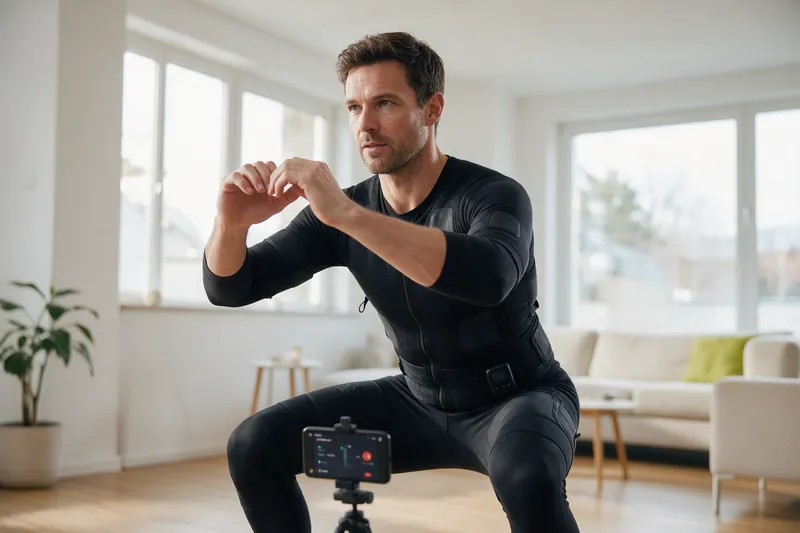
Best EMS suit for home use: our picks by need
Which EMS suit suits home training? Our picks for no subscription, Android, guided classes, lowest price, couples, unusual sizes and trainers.
EMS suit buying guide: 9 specs that really matter
Wired or wireless, wet or dry, channels, parameters, app, washing, certification and running costs. How to read an EMS suit spec sheet.
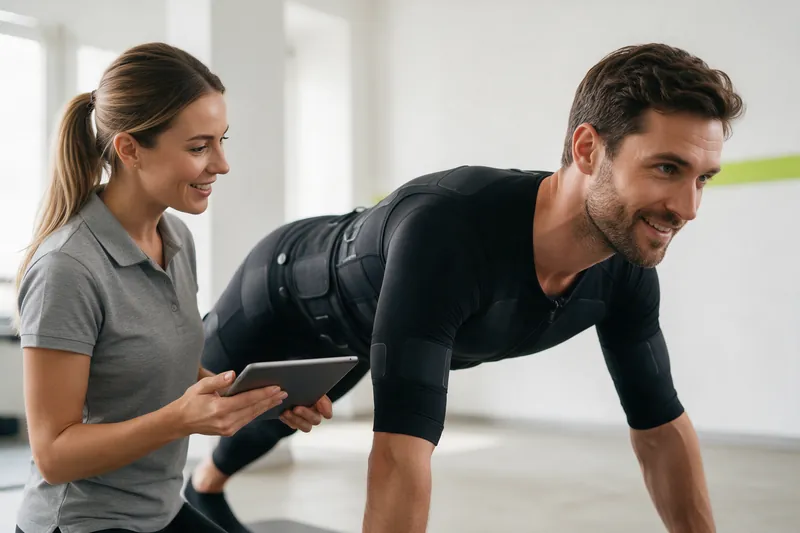
Does EMS training work? What the studies show
Meta-analyses show whole-body EMS builds muscle and strength in untrained adults. Fat loss and benefits for athletes are far less certain.
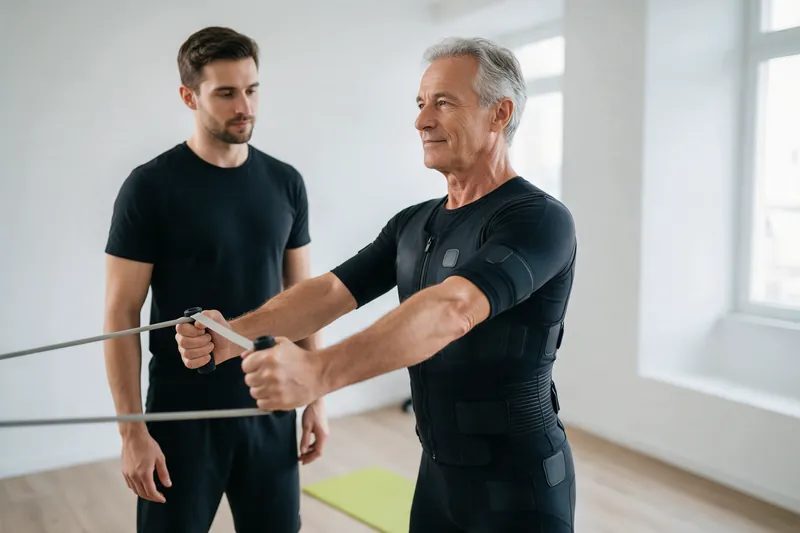
Is EMS training safe? Risks, rules and who should avoid it
EMS is safe for most healthy adults when intensity is built up slowly. The real risks, the expert guideline, and the full contraindication list.

FDA-cleared EMS suits: which brands have a 510(k), and what it means
Which EMS suits have an FDA 510(k) clearance you can verify, which only claim one, and why “cleared” does not mean “approved”.
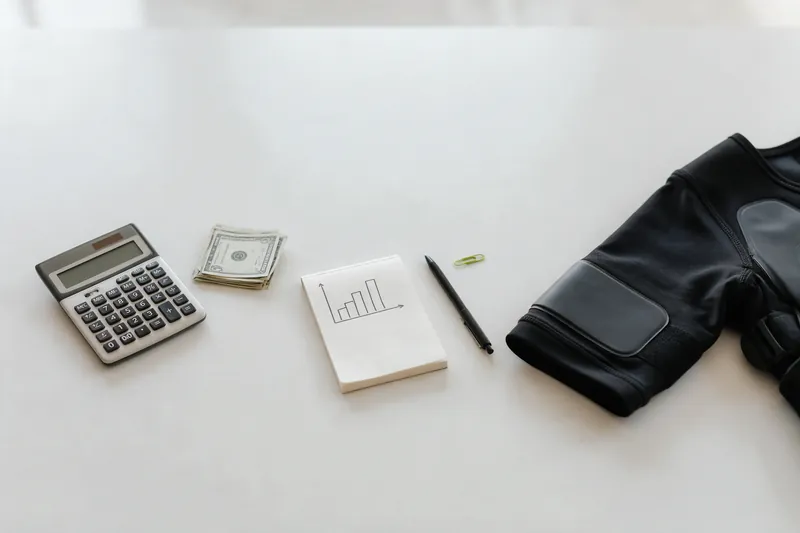
EMS suit cost in 2026: what you really pay over three years
EMS suits cost $1,299 to $2,999 to buy, but subscriptions change everything. See purchase prices, fees and three-year totals for every home suit.
Questions
EMS suit FAQ
What is the best EMS suit in 2026?
In our comparison Visionbody ranks first among home suits. It is cable-free, uses 24 dry electrodes on 12 channels, has a verifiable FDA 510(k) clearance (K222386) and costs $1,890 with no subscription. We work with Visionbody, so check our reasoning: every specification on this site links to its source.
Who runs bestEMSsuits.com?
The site is operated by people who work with Visionbody, one of the brands compared here. We disclose that on every page, use one public scoring method for all brands, and link every fact to a source so that you can verify it.
Do EMS suits really work?
Meta-analyses of randomised trials show that whole-body EMS increases muscle mass and strength in untrained adults. Effects on body fat are small and inconsistent, and for already active people EMS is not better than conventional training. Almost all trials used supervised sessions.
Are EMS suits safe to use at home?
EMS is safe for most healthy adults when intensity is built up slowly. The main risk is severe muscle damage (rhabdomyolysis) after a first session that is too intense. The 2023 expert guideline recommends supervision and advises against unsupervised use, so home users should start low, train at most once a week for the first 8 to 10 weeks, and check the contraindications with a doctor.
What is the difference between wet and dry electrodes?
Wet systems need the electrodes or an undergarment to be moistened before each session. Dry electrodes work on bare skin using natural skin moisture. Dry suits are quicker to put on. There is no independent trial showing that one type produces better training results.
How much does an EMS suit cost?
Home suits in our comparison cost between $1,299 and $2,999 to buy. Subscriptions change the picture: over three years, totals range from about $1,800 to more than $4,700. Professional studio systems are sold by quote.
Is any EMS suit FDA approved?
No. EMS suits are Class II devices that can receive 510(k) clearance, which is not the same as approval. We could verify clearances in the FDA database for Visionbody, Katalyst, PEPPER, miha bodytec, XBody and E-Fit. The FDA has not cleared any EMS device for weight loss or girth reduction.
How often should you train with an EMS suit?
The international guideline recommends no more than one 20-minute session a week during the first 8 to 10 weeks, and afterwards at least four days between intense sessions.